
Why you won't find it in supermarkets
In short: You can recognise real Kampot pepper by the protected geographical indication (PGI), the origin "Kampot Province" and the fact that it is sold as whole peppercorns.
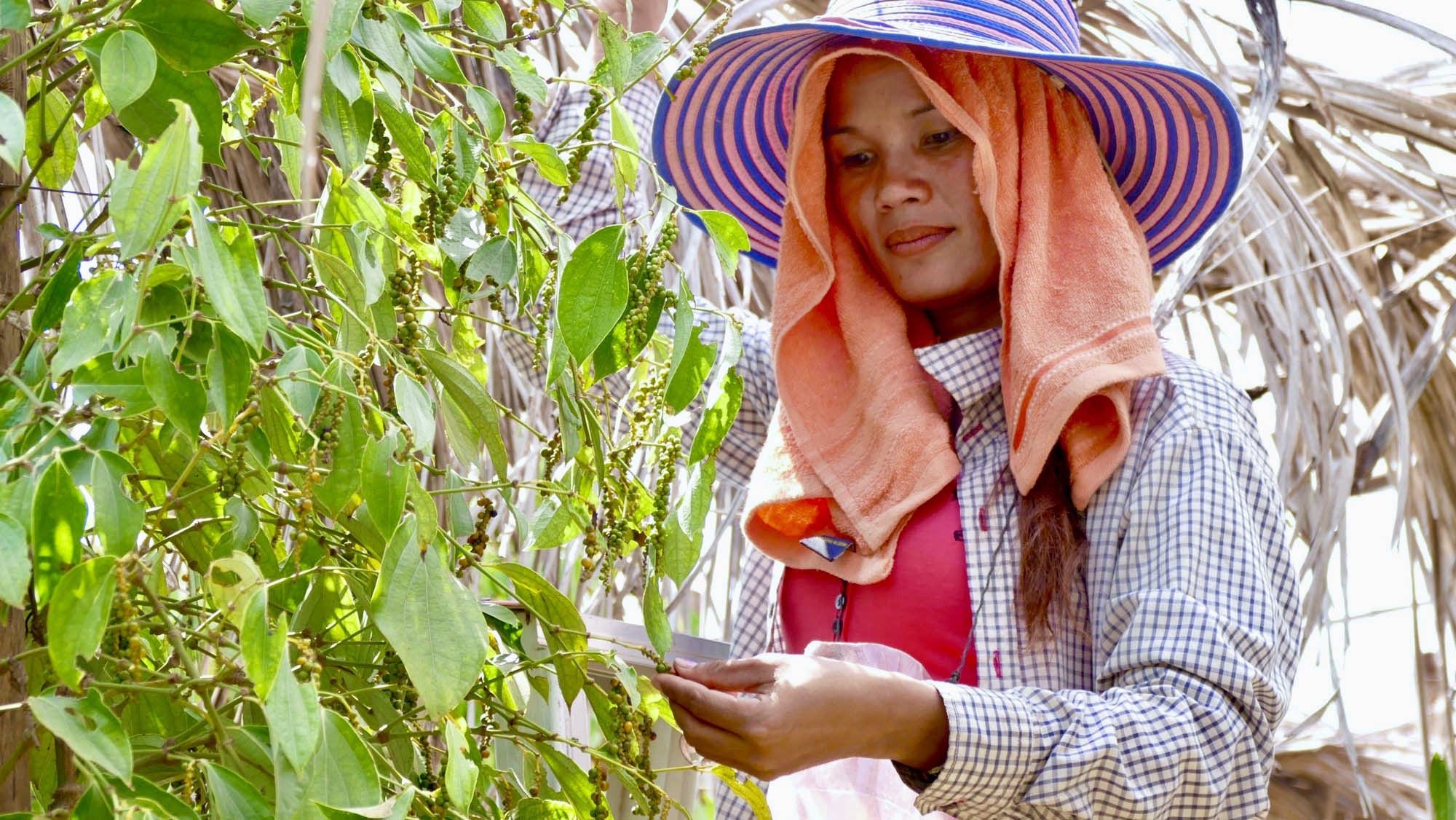
The annual harvest of the entire region is smaller than the pepper consumption of a single large German city. What sits on supermarket shelves as "premium pepper" is usually conventional trade pepper from Vietnam or Brazil – solid produce, but not Kampot.
The four hallmarks of real Kampot pepper
Check these four points and you can't go wrong.
1. PGI seal
Kampot pepper is the world's first pepper with protected geographical indication. If that reference is missing, it is not Kampot.
2. Whole peppercorns
Real Kampot is practically never sold ground – the aroma would fade within weeks.
3. Named farm
Reputable traders name the farm or cooperative. We personally know the people who harvest our pepper.
4. The price
Below roughly €10 per 100 g, real Kampot pepper is not commercially honest – hand harvesting and fair wages have their price.

Where to get real Kampot pepper
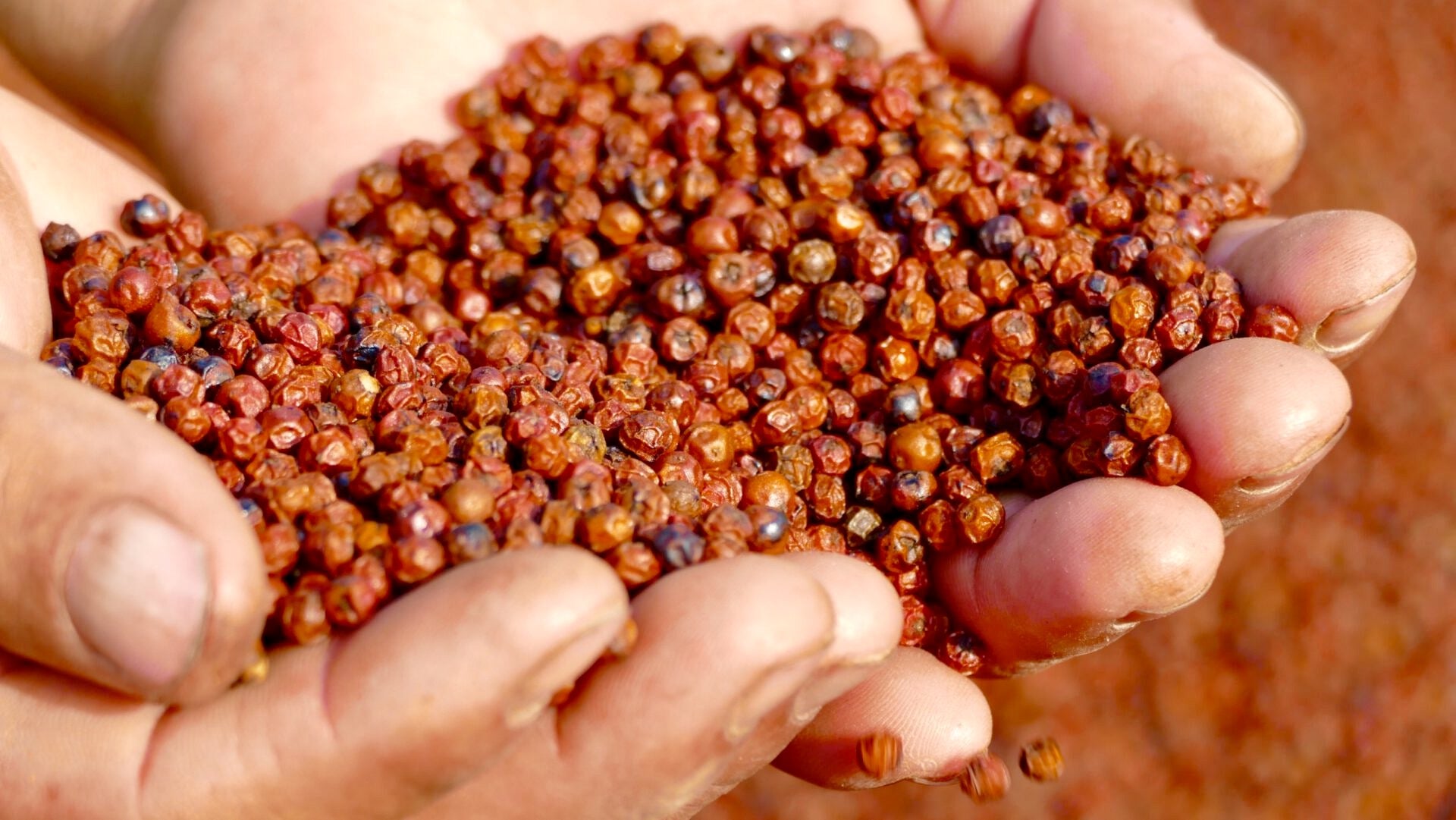
Directly from an importer with a farm relationship. We import without middlemen from the Swiss Farm in Kampot and have every batch Ecocert-certified. In the Stuttgart area you can also get our pepper locally.
Is expensive supermarket pepper an alternative?
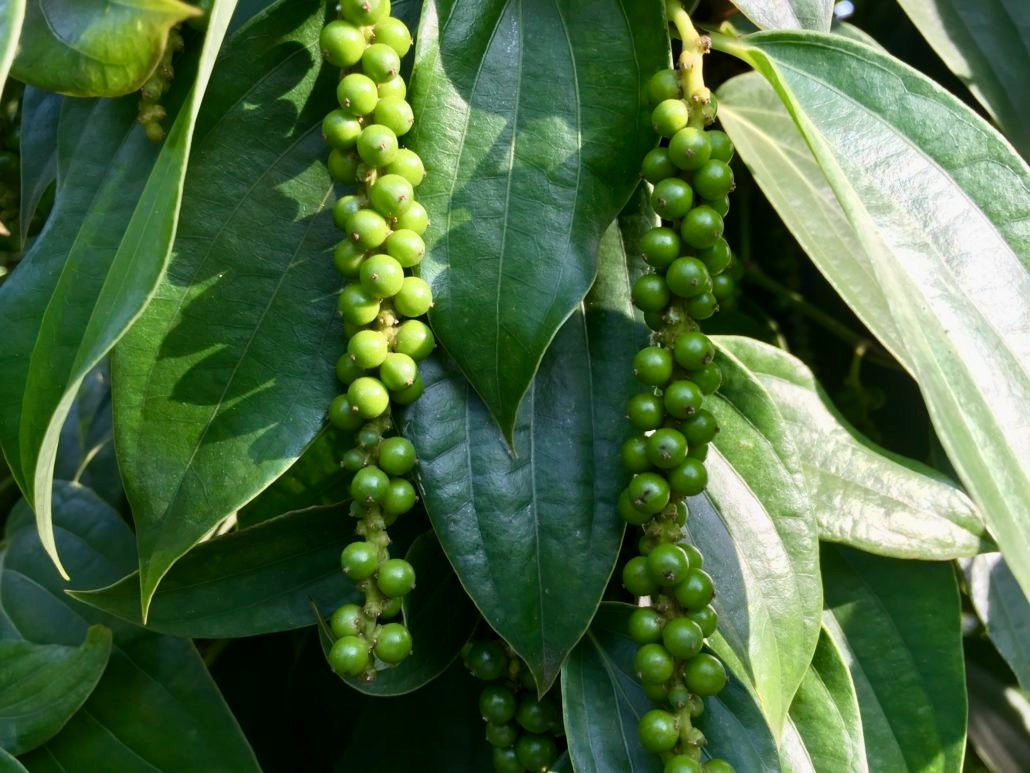
Good supermarket mill pepper is perfectly fine for everyday use. The difference shows in the finish – where pepper is meant to define the dish. Our tip: everyday pepper for the pot, Kampot for the plate.
Frequently asked questions
Is Kampot pepper sold at EDEKA or REWE?
Usually not. The region's harvests are too small for food retail chains. What is sold there as "premium pepper" mostly comes from Vietnam or Brazil.
How do I recognise counterfeits?
A missing PGI label, ground pepper, no origin beyond "Asia" and a price well below €10 per 100 g are clear warning signs.
What exactly does PGI mean?
Protected geographical indication – an EU seal like for Champagne or Parma ham. Kampot pepper may only be grown in the Kampot region and processed there to defined standards.